
Yemen’s Houthi rebels have joined the conflict in the Middle East,launching a missile bound for Israel.
It marks the first time the country has involved itself in the war,which began one month ago today after the US and Israel launched Operation Epic Fury.
Strikes have covered the region ever since,with Trump targeting Tehran while Iran launches strikes at US military bases.
Now,a military spokesman for the Houthis said they are prepared to join the war on behalf of Iran after the US and Israel targeted power and nuclear sites.
This is not the first time they have involved themselves in conflict in the region.
Two years ago the breakaway faction repeatedly launched drones and missiles against commercial vessels,claiming to be attacking Israeli ships in support of Palestine.
It accused the West of ‘blatant aggression’ and after airstrikes on Friday hit dozens of targets,vowing to respond with ‘punishment or retaliation’.
Britain has walked a tightrope over Yemen’s civil war for the last decade – keep reading to find out who’s involved and why some fear the situation could escalate into a full-blown war in the region.
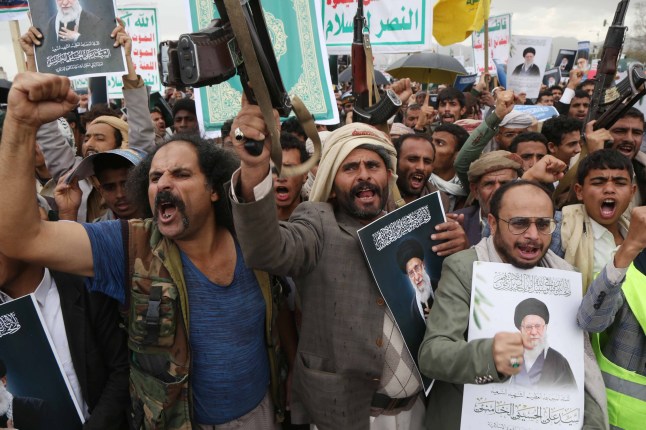
Thousands of people gather at Sabeen Square,under the control of the Iran-backed Houthis in Yemen,to protest the killing of Iran’s leader Ali Khamenei (Picture:Mohammed Hamoud/Anadolu via Getty Images)
The Houthi movement is a political and military group that follows a minority strand of Islam called Zaydism,and draws its name from an ancient Arab tribe from northern Yemen called the Houthis.
Following rising instability in the wake of the Arab Spring,they seized control of the Yemeni capital of Sana’a in 2014,sparking one of the deadliest civil wars in recent history – which is still ongoing today.
Yemen’s official government,recognised by most countries including the UK,is backed by a Saudi-led coalition which Britain has supplied with weapons.
Both sides are widely believed to have carried out war crimes and atrocities against civilians,overseeing some of the worst humanitarian conditions in the world.
The Houthis are currently in control over almost all of northern Yemen,although much of the country has been devastated,with a death toll of over 150,000.
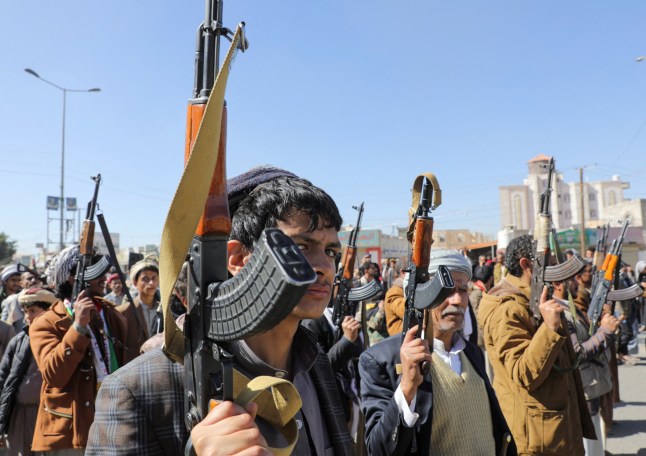
The Houthis are locked in one of the deadliest conflicts in recent history (Picture: Reuters)
Although the involvement of the Houthis may help Iran bolster supplies,it does not help them strategically.
A former top UK military commander told Metro.co.uk: ‘This development increases the risk to political stability and has the potential to further undermine economic confidence. It is a cause for concern.
 Follow us to receive the latest news updates from Metro (Picture: Getty Images)Metro’s on Whatsapp! Join our community for breaking news and juicy stories.‘Modern warfare,as demonstrated in Ukraine and recently in the Middle East,has shown that while countering the drone threat is difficult,it is not impossible. It is a cat-and-mouse game and addressing it demands skill,patience,and technology.‘However,it is important to recognise that tactical military solutions do not resolve strategic problems. The issue surrounding the conflict with Iran is strategic in nature and the weapons of war won’t resolve that.‘It will be resolved when one or both sides reach a point of exhaustion and turn toward negotiation and diplomacy. We are just four weeks in and it is far too early to determine the outcome.‘Historically,wars end either in total defeat or exhaustion. In this case I think we are going to see more exhaustion than complete destruction.’
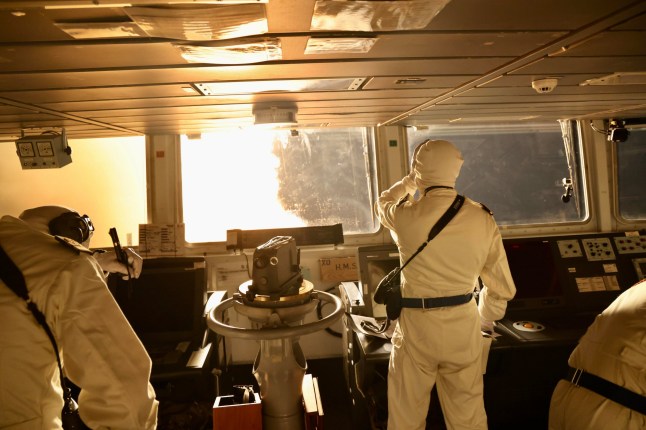 HMS Diamond and US jets shot down the biggest wave of drone and missile attacks in the Red Sea on container ships (Picture: MOD)One of the first incidents – when the Houthis hijacked what they claimed was an Israeli cargo ship in November – actually involved a British-owned ship run by a Japanese firm and staffed by crew from all around the world.More recently,a Houthi spokesperson said any ship destined for Israel is a ‘legitimate target’. The UN’s shipping watchdog has since confirmed that the Houthis are continuing to attack ships with no links to Israel whatsoever.
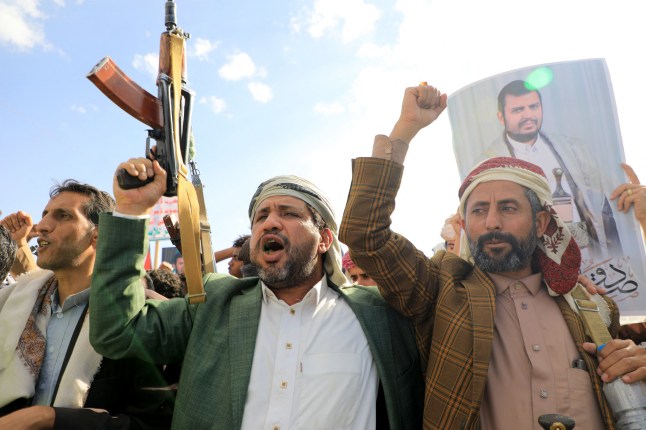 Yemeni men brandish weapons and portraits of leader Abdul Malik al-Houthi (Picture: AFP)Yemen’s Houthis are backed by Iran,which began increasing its aid to the group in 2014 as the civil war broke out.Iran’s theocratic government follows the Shia branch of Islam,of which the Houthi’s Zaydist belief system is a strand.Iran has given the militants training and an array of sophisticated weapons and military technology,with the alleged help of Lebanon’s Hezbollah terrorist group.The West has accused Iran of involvement in the Red Sea attacks two years ago and ordering the Houthis and other Middle Eastern militias to carry out their attacks on Israel,which Iran denies.The UN Panel of Experts on Yemen previously found that Iran has ‘failed to take the necessary measures to prevent the direct or indirect supply,sale or transfer’ of various ballistic missiles that the Houthis have deployed against all the vessels.Get in touch with our news team by emailing us at .
English Morning News: Your Source for Regional News and Corporate
© English Morning News
Privacy Policy